
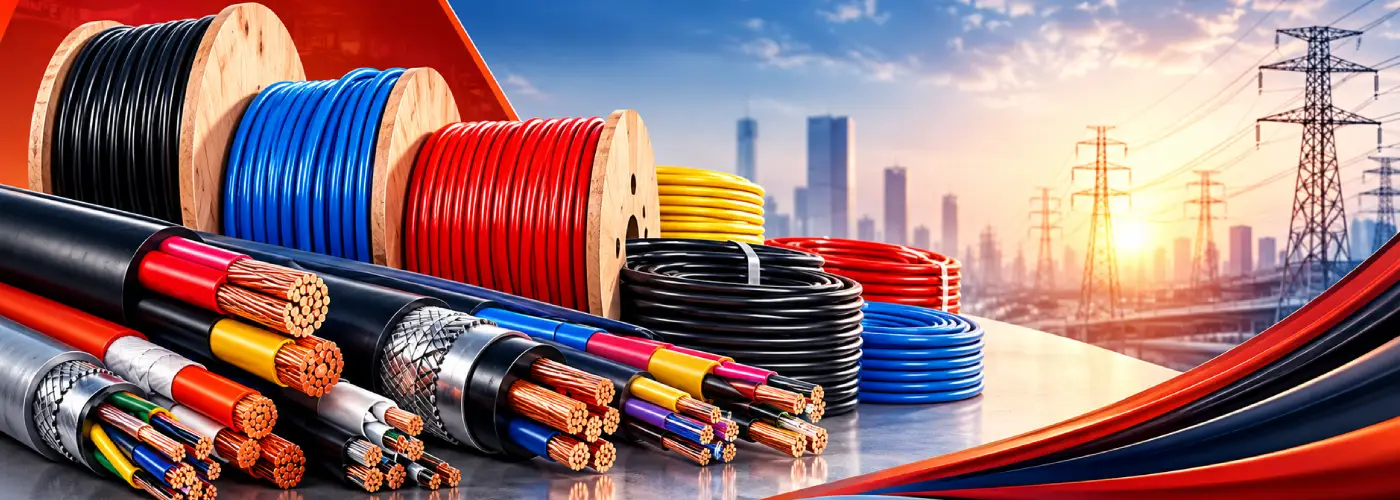
Load Cell Cable and Wire Manufacturer
MEM Industries manufactures and supplies Load Cell Cable and Wire for weighing, measurement, automation and industrial instrumentation applications. These cables are designed to carry low-level electrical signals between load cells, junction boxes, weighing indicators, controllers and associated measurement equipment. Proper conductor selection, shielding and cable construction are important for maintaining signal integrity in weighing systems.
Product Explore Our Product Range
Our Load Cell Cable and Wire range can be configured for different weighing and instrumentation requirements, including:
- Load Cell Signal Cable
- Shielded Load Cell Cable
- Multi-Core Load Cell Cable
- Flexible Load Cell Wire
- Junction Box Connection Cable
- Weighing Scale Cable
- Industrial Weighing System Cable
- Custom-Length Load Cell Cable
Depending on the application, cables can be supplied with different conductor sizes, core configurations, insulation materials, shielding arrangements and outer jackets.
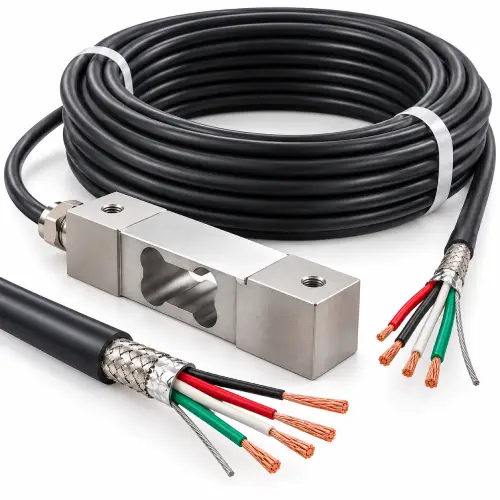
Why Industries Prefer Our Load Cell Cable and Wire
Industries require dependable connections between load cells and their associated instrumentation. MEM Industries provides Load Cell Cable and Wire with configurations that can be selected around the electrical, mechanical and environmental requirements of the weighing application. The availability of shielded, multi-core, flexible and application-specific constructions makes these cables suitable for different types of load-cell installations. For critical measurement systems, the cable should be selected based on the load-cell manufacturer’s recommended specifications, cable length, electrical environment and installation method.
What Makes This Product Different?
Load cell signals are generally low-level signals, so the cable connecting the sensor to the measuring instrument must be selected carefully. A suitable cable helps maintain consistent signal transmission while reducing the effect of electrical interference.
- Shielded Signal Construction
Shielding can help reduce the influence of electromagnetic and radio-frequency interference on sensitive weighing signals.
- Flexible Cable Design
Flexible constructions are useful where the cable must be routed around weighing equipment, junction boxes or moving components.
- Multi-Core Arrangement
Multiple cores allow excitation, signal and sensing connections to be carried within a single cable assembly where the load-cell system requires them.
- Moisture-Resistant Options
For weighing equipment used in industrial or outdoor environments, suitable insulation and sheath materials can be selected according to the expected exposure.
- Application-Specific Conductors
Conductor size can be selected according to cable length, signal requirements, installation conditions and the equipment manufacturer’s specifications.
Product Dimensions & Ratings
Parameter | Typical Specification |
Product | Load Cell Cable and Wire |
Conductor | Copper / Tinned Copper as specified |
Conductor Construction | Stranded / Flexible |
Core Configuration | Multi-Core / As required |
Conductor Size | Application-specific |
Insulation | PVC / PE / Other suitable material |
Shielding | Overall Shield / Individual Shield as required |
Drain Wire | Available in shielded constructions |
Outer Sheath | PVC / PUR / Other specified material |
Voltage Rating | According to cable design |
Temperature Range | Based on selected insulation and sheath |
Cable Diameter | According to core size and construction |
Colour | As specified |
Length | Standard Coil / Drum / Custom Length |
Application | Load Cells, Weighing Systems, Scales, Junction Boxes and Instrumentation |
Performance Advantages
- Maintains Signal Quality
A properly selected load cell cable helps transfer the electrical output from the sensor to the weighing or measurement equipment with appropriate signal integrity.
- Helps Reduce Electrical Interference
Shielded cable constructions can be used where nearby motors, drives, power cables or industrial equipment may create electromagnetic interference.
- Supports Accurate Weighing Systems
The cable is an important part of the overall measurement circuit. Appropriate conductor and shielding selection supports stable communication between the load cell and connected instrumentation.
- Suitable for Longer Cable Runs
For installations where load cells are located some distance from the weighing indicator or control system, cable characteristics should be selected according to the required installation length and signal requirements.
- Easy Integration
Load Cell Cables can be used in weighing scales, batching systems, industrial weighing equipment and automation installations.
Reasons to Partner With Us
MEM Industries focuses on application-oriented cable requirements rather than offering a single generic construction for every weighing system.
Customers can discuss requirements such as:
- Number of cores
- Conductor size
- Shielding requirement
- Cable length
- Insulation material
- Sheath material
- Temperature conditions
- Indoor or outdoor installation
- Required quantity
- Equipment or load-cell model
This allows the cable specification to be matched more closely with the connected weighing system.
Trusted Across Multiple Sectors
Load Cell Cable and Wire can be used across a wide range of industries where electronic weighing and force measurement are involved.
- Industrial Weighing Systems
- Weighbridges
- Platform Scales
- Batching and Dosing Equipment
- Manufacturing Plants
- Packaging Machinery
- Material Handling Systems
- Food Processing Equipment
- Chemical Processing Plants
- Logistics and Warehousing
- Process Automation
- Testing and Measurement Equipment
Contact MEM Industries for Load Cell Cable and Wire
Need Load Cell Cable and Wire for weighing scales, industrial automation, batching equipment or instrumentation systems? MEM Industries can assist with product requirements based on core configuration, conductor size, shielding, insulation, sheath, cable length and quantity. For bulk orders or project requirements, share your required specifications and application details with MEM Industries to discuss a suitable cable configuration and quotation.